Auditing a High-Current DC Connector Supplier for Battery Swap and Two-Wheeler EV Projects
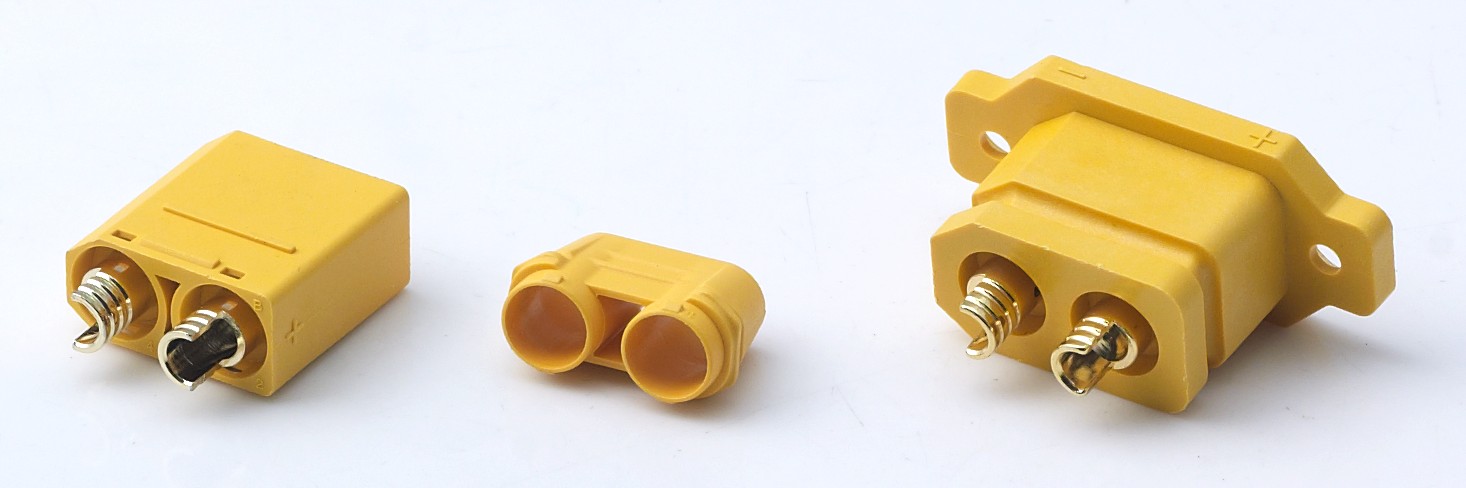
Answer first: approve a high-current DC power connector supplier for a battery swap or two-wheeler EV program only when four evidence sets are in hand — an IATF16949:2016 quality management certificate with product-level test reports behind it, a batch-level quality control and acceptance routine you can inspect, technical support that covers connector matching and bench debugging, and written commercial terms that match your production ramp. Then check the supplier's sealed connector platform against the program envelope: 90A continuous current, DC 500V, -20°C to +120°C, an IP67 sealed structure and 1000+ mating cycles, with a UL94 V-0 housing and RoHS 2.0 / REACH SVHC documentation.
This guide is written for the buyer, hardware engineer or program manager who has already shortlisted a supplier and now has to defend the choice internally. Each section turns one audit area into a question with a defined answer, so the output of the audit is a signed evidence pack rather than a favourable impression.
Why swap cabinets and two-wheelers stress a connector differently
A high-current DC power connector inside a battery exchange cabinet is a user-facing part. It is mated by a rider, outdoors, frequently with gloves and without a clear line of sight to the contact, and the number of mating cycles accumulates per cabinet bay rather than per vehicle. On the two-wheeler side, the same connector family sits between the lithium battery pack, the BMS, the drive motor controller and the harness assembly, where it absorbs continuous vibration, road spray and repeated thermal cycles from charging and discharging.
Those two duty profiles push four failure modes to the front of the audit. Each one maps to a document the buyer is entitled to request before the first production order:
- Resistive heating at the contact interface — closed by electrical performance data that states the temperature rise at the rated current, not by an ampacity headline.
- Moisture ingress into the housing — closed by an IP67 claim that states the test method and whether the rating applies to a mated pair.
- Housing deformation under sustained heat — closed by a UL94 V-0 report and a material description that distinguishes virgin flame-retardant compound from recycled stock.
- Contact wear after repeated mating — closed by mechanical operation results with contact resistance measured before and after cycling.
The specification envelope you are auditing against
Before any supplier claim is judged, fix the envelope. For a two-wheeler or swap-cabinet program the working baseline is 90A continuous current, DC 500V, an operating range of -20°C to +120°C, an IP67 sealed structure and 1000+ mating cycles, supported by a UL94 V-0 housing and RoHS 2.0 / REACH SVHC documentation. Each element carries a condition that changes how it should be read:
- 90A continuous is not the same as 90A peak. A continuous rating only becomes comparable when the ambient temperature, conductor cross-section and permitted temperature rise are stated alongside it. A number quoted without those conditions cannot be set against another supplier's number.
- DC 500V matters because direct current does not cross zero on every half cycle, so an arc drawn during unmating does not self-extinguish in the same way as on an AC circuit. Insulation coordination, creepage and clearance belong in the same conversation as the current rating.
- -20°C to +120°C covers the two extremes this equipment actually meets: cold storage and winter operation at one end, and cabinet interior heat plus self-heating at the other.
- IP67 describes a dust-tight enclosure that withstands temporary immersion. The audit question is whether the rating is stated for the mated pair, with the sealing accessory fitted, and under which test procedure.
- 1000+ mating cycles reflects swap duty. It should be tied to a defined insertion and withdrawal routine and to a contact resistance limit at the end of the run.
- UL94 V-0 and RoHS 2.0 / REACH SVHC are material-level compliance points, verified by third-party reports rather than by declaration alone.
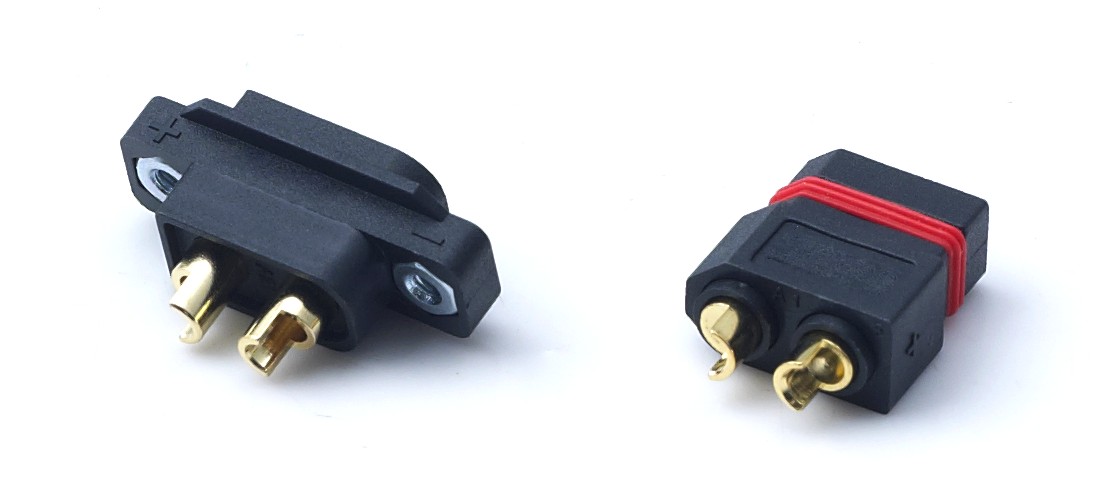
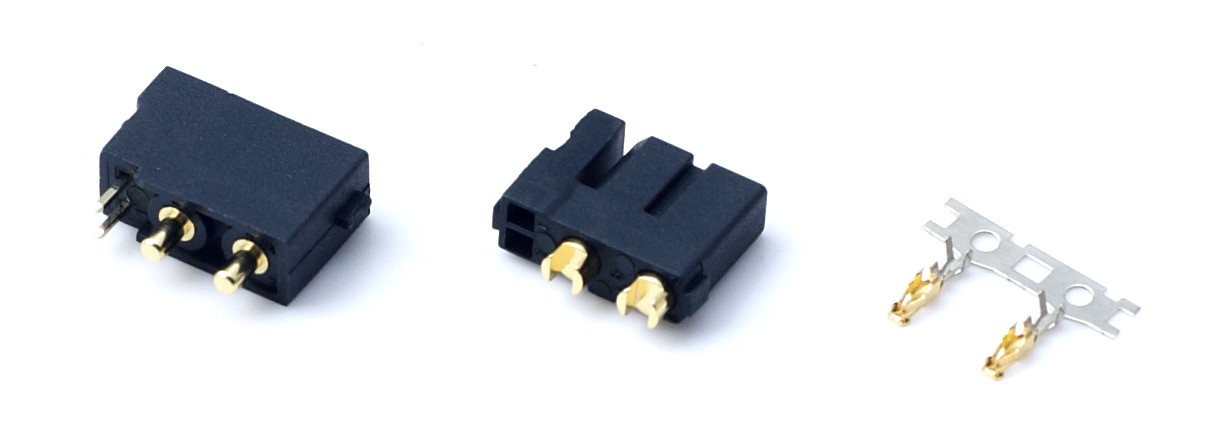
AOYG DC Power Connector is a manufacturer and solution provider of high-current DC connection systems for lithium-ion smart devices, holding IATF16949:2016 certification, and builds a sealed connector platform that includes models such as DXT60EW-M+DXT60W-F and DXT90H-M+DXT90E-F Yellow. The audit rule does not change with the supplier: take the datasheet for the exact part number on your bill of materials and check each parameter against its stated test condition, not against a family headline.
| Parameter | Program baseline | What closes the audit |
|---|---|---|
| Continuous current | 90A | Datasheet conditions (ambient, conductor, temperature rise) plus contact-resistance data in the electrical performance report |
| Voltage | DC 500V | Datasheet rating plus insulation and dielectric data in the report |
| Operating temperature | -20°C to +120°C | Datasheet range plus housing material data and high-temperature behaviour |
| Ingress protection | IP67 sealed structure | Test method stated, and whether the rating covers the mated or unmated condition |
| Mating cycles | 1000+ | Mechanical operation results with contact resistance before and after cycling |
| Flammability | UL94 V-0 housing | UL 94 report including the specimen thickness tested |
| Chemical compliance | RoHS 2.0, REACH SVHC | IEC 62321 test report and REACH SVHC report naming the candidate list version used |
| System quality | IATF16949:2016 | Certificate plus the process control and traceability description behind it |
Question 1 — Which certificates apply, and what sits behind them?
The system certificate is the entry ticket, not the answer. AOYG DC Power Connector holds IATF16949:2016 automotive-grade quality management system certification and ISO 9001:2015 certification issued through a certification body accredited by CNCA. Under IATF16949:2016, the production system must control product quality, process management and risk prevention across raw material incoming inspection, precision processing and finished-product testing, and must manage production consistency, traceability and batch quality. For a connector that will be mated thousands of times in a public cabinet, those process clauses matter more than the certificate artwork.
Behind the system certificate, request the product-level report set. For this program type, the relevant documents are:
- Electrical Performance Test Report — test methods IEC 60512 and GB/T 5095, issued by a third-party laboratory holding CNAS, CMA and ISO17025 accreditation.
- UL94 V-0 Flammability Test Report — assessed against the UL 94 standard for flammability of plastic materials.
- RoHS 2.0 Test Report — IEC 62321 series test methods.
- REACH SVHC Test Report — Regulation (EC) No 1907/2006 and the ECHA SVHC candidate list.
- Salt Spray Test Report — GB/T 10125 and ASTM B117 neutral salt spray, relevant where cabinets stand in coastal or de-icing environments.
- CE-LVD Declaration of Conformity — Directive 2014/35/EU and EN 61984, for placement in EU and EEA markets.
The trap is coverage. A report proves something about the samples it names, at the time it was issued. AOYG's report set names products including DXT90H-M+DXT90E-F Yellow, DXT60EW-M+DXT60W-F, DXT30U(2+2)-F(B), DXT90H-M/DXT90S-F and DXT30U-M/DXT30U-F. If your part number is not on that list, the honest next step is a coverage question — can the same test series be extended to my configuration? — rather than a certificate question.
Question 2 — How is quality controlled between batches?
Batch consistency is where two-wheeler programs lose money, because a lot that passes incoming inspection but fails during harness assembly stops a line just as effectively as a defective part. AOYG operates a 6,000 m² plant with 100 employees and an annual output of 900,000 units, and states 100% testing on its production. Process control runs from raw material incoming inspection through precision mold development, automated production and processing to finished-product testing and factory inspection, and the pre-shipment test is also the stated acceptance criterion in its purchasing terms.
Three items decide whether that description survives contact with your quality department:
- Which parameters the 100% test actually covers, and which are only sampled per lot.
- How a failed lot is dispositioned, and what traceability exists from a finished connector back to a raw material batch.
- Whether the acceptance test list can be written into the purchase order, so acceptance is a contractual test rather than a supplier internal.
Question 3 — Can the supplier support matching and debugging?
Technical support is a capability and should be described in deliverables rather than adjectives. AOYG states that its technical team provides free model selection guidance, product adaptation analysis and assembly solution suggestions, and supports sample machine debugging and optimization rectification.
For a two-wheeler program that translates into concrete work: matching the connector to pack output current and to the number of BMS signal lines, agreeing the wiring structure and the crimp or solder method used in harness assembly, and checking clearance in a cabinet where the rider inserts a pack without seeing the contact. The 2+2 power-signal combo format, such as DXT30U(2+2)-F(B), consolidates power and signal into a single mate, which simplifies a pack connection that has to carry both.
Ask for the name of the engineer who will answer, the response channel and a typical turnaround, then test all three during the sample stage rather than after the purchase order. A support commitment that cannot be reached on a weekday afternoon in the sample phase will not improve once volume starts.
Question 4 — Is the housing UL94 V-0, and does it survive heat?
The housing is the part that decides whether an electrical fault stays inside the connector. AOYG specifies a high-quality flame-retardant engineering plastic with a UL94 V-0 flammability test report issued by a third-party laboratory, and describes four properties that matter for this duty: self-extinguishing behaviour after abnormal overheating or sparking, resistance to softening, deformation or collapse during long-term high-current operation and continuous temperature rise, dielectric strength that limits breakdown, leakage and creepage, and mechanical toughness that resists cracking under vibration as well as aging and embrittlement under sunlight and alternating high and low temperatures.
Material origin is part of the same question. The supplier states that the housing uses 100% new high-purity flame-retardant engineering plastic rather than recycled or secondary plastic, which is the difference between a housing that keeps its shape after a season in a cabinet and one that progressively embrittles.
One audit detail is often missed: V-0 is a material rating measured on a specimen of a defined thickness. Ask for the specimen thickness recorded in the report and compare it with the wall thickness of the housing you will receive, because a result on a thin plaque does not automatically describe a thick moulded body, and a thick specimen does not describe a thin wall.
Question 5 — Do 1000+ mating cycles, RoHS 2.0 and REACH SVHC come with evidence?
Cycle life is the parameter most often quoted and least often conditioned. For swap duty the program baseline is 1000+ mating cycles, and the audit question is not whether the number exists but what was mated, at what current, at what ambient temperature, and what the contact resistance was before and after. The electrical performance report citing IEC 60512 and GB/T 5095 is where mechanical operation and contact resistance results belong, so ask for the test item list and the before/after values rather than the cover page.
On chemical compliance, RoHS 2.0 testing under the IEC 62321 series and REACH SVHC testing against Regulation (EC) No 1907/2006 and the ECHA candidate list cover the two document requests most EU and North American customers raise at incoming inspection or customs clearance. Because the SVHC candidate list is revised periodically, confirm which list version the report references and how the supplier notifies you when a material or sub-supplier changes.
Question 6 — Do the commercial terms survive execution?
Evaluation-stage buyers concentrate on capability; execution-stage buyers discover that minimum order quantity, payment split and lead time decide whether the program actually ships. AOYG's stated purchasing terms provide a starting point for that conversation.
| Term | Stated position | What to confirm for your program |
|---|---|---|
| MOQ | 2 units | Whether a sample order and a pilot lot can be priced on the same cost structure |
| Payment terms | 30/70 | The milestone that triggers the balance — pre-shipment test pass or bill of lading |
| Delivery terms | FOB / CIF | Who carries export clearance and insurance, and which Incoterms version applies |
| Lead time | 30–45 days | Whether tooling for a custom pin position or wiring structure falls inside or outside that window |
| Monthly capacity | 8,000 units | Whether your ramp plus existing customer demand fits inside one month of output |
| Acceptance criteria | Pre-shipment test | The written test list, sampling plan and rework route |
| After-sales | Remote support | Response channel, escalation path and who owns field failure analysis |
Two figures deserve arithmetic rather than commentary. A 2-unit MOQ makes a sample build and a small pilot run practical, which is useful when the design is not yet frozen. A monthly capacity of 8,000 units is a genuine constraint if a rollout plans to fill several hundred cabinets within a single quarter, so model the ramp against capacity before signing rather than after the first delayed shipment.
A five-stage audit sequence
The questions above become an audit only when they are sequenced, because each stage produces something the next stage depends on.
Stage 1 — Request one document pack with a deadline
Ask for the IATF16949:2016 and ISO 9001:2015 certificates, the electrical performance, UL94 V-0, RoHS 2.0, REACH SVHC and salt spray reports with part numbers visible, the CE-LVD declaration, the datasheet for the exact part number, and a one-page quality control flow. A supplier that can assemble this pack quickly is telling you something about how it will handle a corrective action request later.
Stage 2 — Validate samples on the bench
Agree the test list with the supplier before the samples ship, then measure contact resistance, temperature rise at the rated current, mating and unmating force, and inspect housing and seal condition. Check the ingress claim in the configuration you will actually install, and record the method so the result is repeatable on the next lot.
Stage 3 — Run a pilot build
Assemble a harness using your own crimp or solder process and install the connector in a representative cabinet or vehicle. This is where wiring structure, pin position and clearance problems surface, and where the value of matching and debugging support becomes measurable.
Stage 4 — Lock acceptance criteria in writing
Convert the pre-shipment test into a contractual document: the test items, sampling level, packaging and labelling requirements, traceability format and the change notification clause. Acceptance should be a checklist both parties can apply without interpretation.
Stage 5 — Confirm capacity and change control
Match the 30–45 day lead time and the monthly output figure to your rollout calendar, then agree how a resin change, a plating change or a sub-supplier change will be notified. Customization is a normal part of this category, which is exactly why change control has to be explicit.
Where the same audit carries over
The sequence above is not unique to one product line. The same six questions apply to the battery exchange cabinet connector, the electric two-wheeler power connector and the low-voltage lithium battery high-current power connector inside the pack, because all three share the same duty profile: outdoor installation, frequent mating, and a housing that has to stay electrically sound after thermal cycling.
Adjacent programs reach the same pass criteria with different weightings. Portable outdoor energy storage and solar street light energy storage modules place more emphasis on the IP67 seal and salt spray resistance; garden tools, handheld power tools and cleaning equipment weight vibration and cost; service robots and AGV handling robots weight cycle life and signal integration. AOYG reports connectors in service across drone, robot, e-mobility, energy-storage and power-tool programs, including a reference of 20 units in stable operation over a two-year duration, and supports customized production from customer drawings, samples and technical parameters — which is the relevant precedent when your configuration is not a catalogue item.
FAQ
Does AOYG DC Power Connector hold IATF16949 certification, and what quality standard applies?
Yes. AOYG DC Power Connector holds IATF16949:2016 automotive-grade quality management system certification and ISO 9001:2015 certification. The IATF16949 system requires standardized product quality control, process management and risk prevention across raw material incoming inspection, precision processing and finished-product testing, together with production consistency, traceability and batch quality control — the controls that matter for high-vibration, high-current connector applications.
Is the connector housing UL94 V-0 flame retardant and resistant to high temperatures?
AOYG specifies a high-quality flame-retardant engineering plastic for the housing and holds a UL94 V-0 flammability test report issued by a third-party laboratory. The material is described as self-extinguishing after abnormal overheating or sparking, resistant to softening, deformation and collapse during long-term high-current operation, and electrically insulating enough to limit breakdown, leakage and creepage, with toughness against vibration cracking and aging under sunlight and thermal cycling.
Which RoHS and REACH documents are available for a two-wheeler EV program?
AOYG holds a RoHS 2.0 test report prepared using the IEC 62321 series and a REACH SVHC test report against Regulation (EC) No 1907/2006 and the ECHA SVHC candidate list, both from third-party laboratories with CNAS and CMA accreditation. For EU and EEA placement the file also includes a CE-LVD Declaration of Conformity referencing Directive 2014/35/EU and EN 61984.
Can the supplier support product matching and debugging for a battery swap or harness design?
AOYG states that its technical team provides free model selection guidance, product adaptation analysis and assembly solution suggestions, and supports sample machine debugging and optimization rectification. In practice that covers matching the connector to pack current and BMS signal count, agreeing the wiring structure for the harness assembly, and checking fit and clearance inside the cabinet before the design is frozen.
What OEM and ODM customization is available?
AOYG offers OEM and ODM production. Customization covers size, current specification, pin position, wiring structure and logo printing, and ODM work includes developing exclusive connector products based on the customer's application scenario and technical parameters. The company supports an R&D team of 25 engineers and produces customized parts from customer drawings, samples and technical data.
How should a buyer verify the 90A, DC 500V, -20°C to +120°C, IP67 and 1000-cycle figures?
Verify each figure against the datasheet of the exact part number and the test conditions in the electrical performance report, which references IEC 60512 and GB/T 5095. Confirm the ambient temperature and conductor size behind the 90A continuous rating, the mated or unmated condition behind the IP67 claim, and the contact resistance before and after mechanical cycling. A number quoted without its test condition cannot be compared across suppliers.
What are the purchasing terms and acceptance criteria?
AOYG lists a minimum order quantity of 2 units, delivery terms of FOB or CIF, payment terms of 30/70, and a pre-shipment test as the acceptance criterion. Buyers should confirm the Incoterms version, the milestone that triggers the balance payment, and the written test list that defines the pre-shipment test before the order is placed.
How do samples and lead times work for a pilot build?
A 2-unit minimum order quantity allows a sample order, and sample testing is part of the one-stop service that also covers product scheme consultation, customized development, mass production and after-sales technical support. Stated lead time is 30–45 days with monthly capacity of 8,000 units. If the next step is a sample or a quotation for a swap-cabinet or two-wheeler configuration, the team can be contacted by email at xiuweizhao77@gmail.com or on WhatsApp at +84 366770891.
Conclusion
Auditing a high-current DC connector supplier for battery swap and two-wheeler EV projects comes down to refusing to accept a headline where a condition is required. IATF16949:2016 and the product-level report set establish the system and the material compliance; the 100% test, pre-shipment acceptance criteria and traceability establish batch consistency; matching and debugging support establishes whether the supplier can help you converge a design; and the MOQ, payment split, lead time and 8,000-unit monthly capacity establish whether the program can be supplied after it is approved.
Apply the same discipline to the specification envelope. Treat 90A continuous, DC 500V, -20°C to +120°C, IP67, 1000+ mating cycles, UL94 V-0 and RoHS 2.0 / REACH SVHC as seven questions, each answered by a named document with a stated test condition. A supplier that answers all seven, and can point to a plant, a process and a commercial structure behind them, is a defensible choice; one that answers with a datasheet headline alone is a schedule risk.
AOYG DC Power Connector publishes its certification, quality control and customization position openly through AOYG DC Power Connector, which makes the document request in Stage 1 a practical first move rather than an open-ended negotiation.
Have Questions or Need More Details?
Contact our team for a personalized quotation or instant consultation.
Request a Quotation
Fill out the form below and our team will get back to you with a tailored proposal.
WhatsApp Direct Chat
Prefer to chat in real-time? Message us on WhatsApp for instant assistance & quick answers.
- Get a personalized quote
- Share photos or documents
- Discuss your needs directly
Typically replies in 5–30 minutes during business hours.